Newmar Bay Star 3014 vs Winnebago Forza 34T
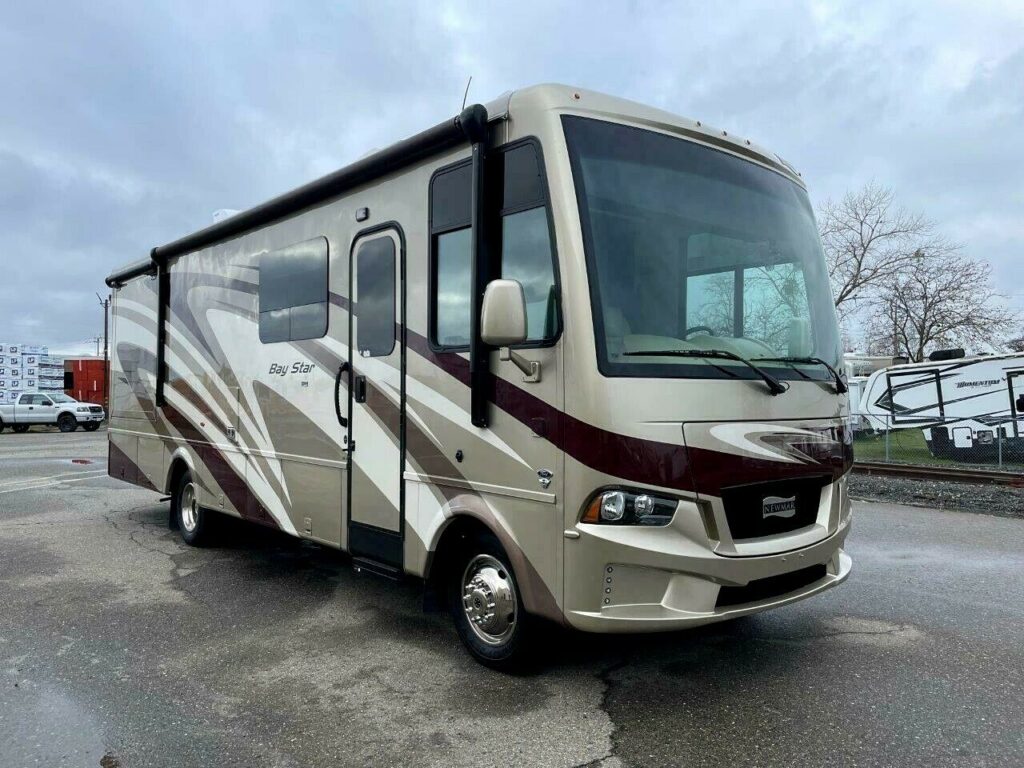
vs
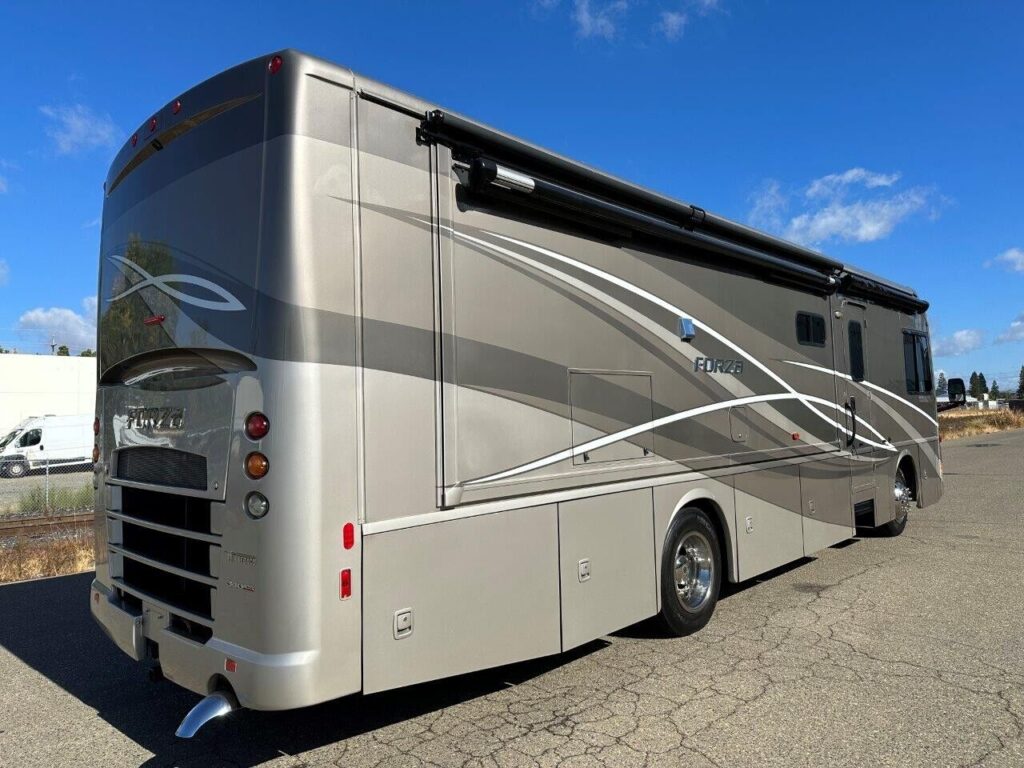
Quick take: The Newmar Bay Star 3014 costs $55,000 less; the Newmar Bay Star 3014 is 2 ft shorter and easier to maneuver; the Winnebago Forza 34T ships with more solar (200W vs 100W).
| Spec | Newmar Bay Star 3014 | Winnebago Forza 34T |
|---|---|---|
| Price | $230,000 | $285,000 |
| Rating | 4.6★ (1,800) | 4.5★ (1,600) |
| Type | Class A | Class A |
| Year | 2025 | 2025 |
| Length | 33 ft | 35 ft |
| Weight | 24,000 lbs | 30,000 lbs |
| Sleeps | 4 | 4 |
| Fresh water | 70 gal | 84 gal |
| Slide-outs | 2 | 3 |
| Solar | 100W | 200W |
| Four-season | No | Yes |
| Pet friendly | Yes | Yes |
| Towable | No | No |
| Chassis | Ford F-53 | Freightliner XCR |
Why owners pick each
Newmar Bay Star 3014
- ✓Newmar's build quality is a step above typical gas Class A coaches
- ✓Comfort Drive steering makes highway driving significantly less fatiguing
- ✓Hardwood cabinetry throughout gives it a residential feel
Winnebago Forza 34T
- ✓Diesel pusher ride quality is dramatically better than gas Class As
- ✓Winnebago build quality in a diesel coach at a competitive price
- ✓Cummins diesel engine is reliable and well-supported
What owners report
Newmar Bay Star 3014
- ✓Newmar's fit-and-finish is the standout - owners coming from Coachmen and Winnebago describe the Bay Star's build quality as 'far above' their previous coaches, with a genuinely premium interior feel
- ✓Standard full-body Masterpiece paint with clearcoat and Diamond Shield front-cap protection gives it a high-end exterior look that value brands charge extra for or don't offer at all
- ✓The 3014 floorplan is well-regarded - a full-wall slide on the off-door side plus a bedroom bed-slide create a roomy, well-laid-out interior with a king or queen bed and a comfortable midship bath
- ✓Built on the Ford F53 with the 7.3L V8 (350 hp, 468 lb-ft) and heavy-duty sway bars, it's a proven, serviceable gas powertrain that tows and handles daily duty without drama
- ✓Aluminum-frame sidewall and roof construction with gelcoated fiberglass and a walkable DiFlex II roof reflect higher-grade structural choices than typical value coaches
- ✗It's still a Ford F53 underneath, which is 'not known for a smooth ride and good handling' - even with Newmar's heavy-duty sway bars, owners should expect some of the usual F53 wind sensitivity and may want a steering stabilizer
- ✗Quality is not uniformly perfect despite the premium price - some owners report real defects, including a bed that broke after the second trip and, alarmingly, a coach battery that burned and smoked while driving
- ✗Gas Class A fuel economy is poor at roughly 6-8 MPG, the standard penalty versus a diesel pusher
- ✗You pay a clear premium over Thor, Coachmen, and Winnebago for the Newmar name and paint, which is harder to justify if you won't notice or use the finish-quality difference
- ✗Getting F53 chassis service post-COVID can be difficult, with many Ford dealers declining motorhomes and pushing non-warranty work to commercial truck shops
- ✗Shorter premium floorplan options - some buyers note Newmar's range is wide but that the most direct Tiffin competitor came only in longer lengths, so cross-shopping on exact size and layout takes effort
Winnebago Forza 34T
- ✓Widely regarded as one of the best entry-level diesel pushers in the industry — owners say it delivers a real diesel-pusher experience without the half-million-dollar price of high-end coaches
- ✓Built on the proven Freightliner XC Series chassis with a Cummins engine, which owners praise as one of the best-supported, best-performing platforms and a breeze to service nationwide
- ✓Cummins power handles mountains well; owners report confident climbing on grades where a gas Class A would struggle and strain
- ✓Real-world fuel economy around 9-10 mpg even while towing a vehicle is strong for a coach this size and far better than a comparable gas Class A
- ✓The 34T floorplan is praised for livability — easy to dine, entertain, and sleep multiple people, with good access to amenities even with the slides retracted
- ✓Diesel-pusher build and components generally outlast gas Class A construction, and the air-ride chassis gives a more planted, premium driving feel
- ✗Lower-compartment leaks are a recurring complaint, especially on the passenger side, letting water into the basement storage bays
- ✗Soft spots in the mid-floor area from insufficient bracing have been reported — a structural gripe owners watch for and sometimes have to reinforce
- ✗Peeling and flaking furniture upholstery is a widespread issue on units up to roughly 2018, a known weak point in the interior materials of that era
- ✗Air-bed mattresses and inconvenient centralized control panels draw owner complaints as everyday annoyances
- ✗Minor fit-and-finish quirks crop up — loose hubcaps, inverter mounting issues, and similar small assembly details
- ✗Diesel-pusher ownership costs more long-term — pricier oil changes, DEF, and chassis service than a gas Class A, which buyers should budget for
- ✗It's still an entry-level diesel pusher, so owners temper expectations — some issues are 'fixable with time and investment' rather than the coach being trouble-free out of the box