Winnebago Travato 59KL vs Winnebago Vista 31B
vs
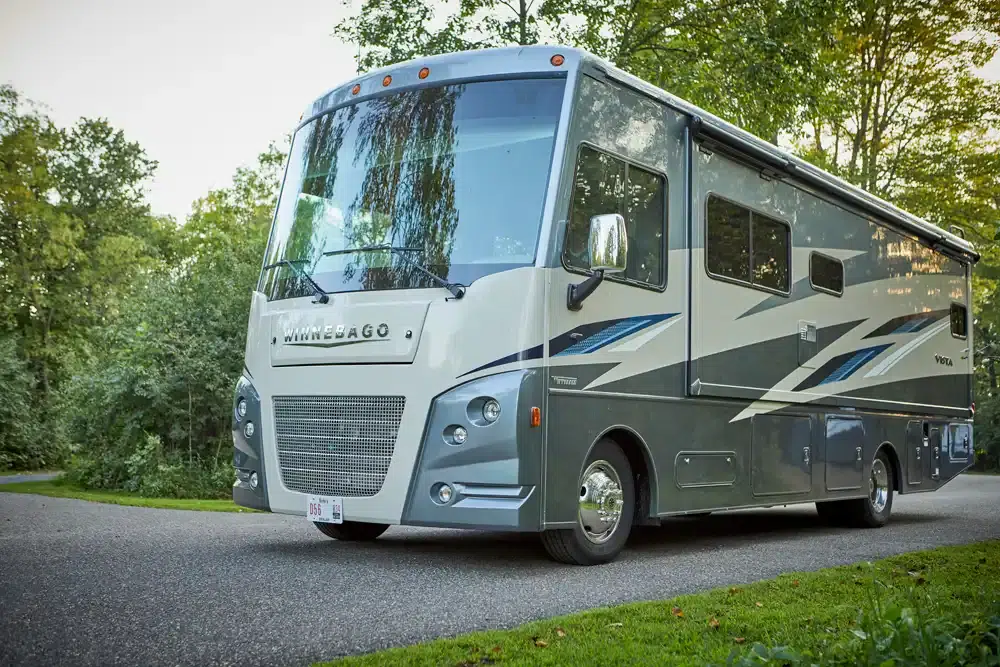
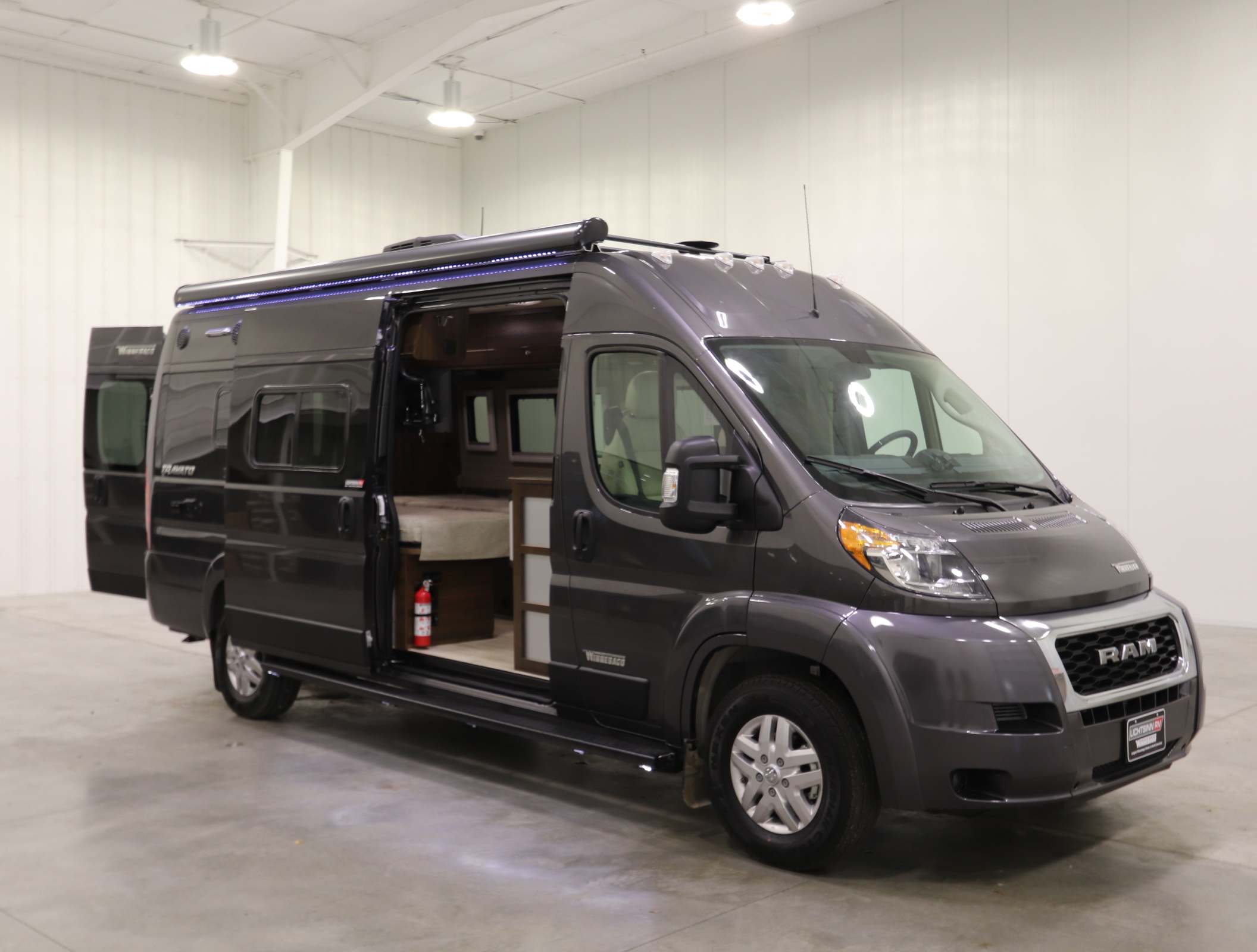
Quick take: The Winnebago Vista 31B sleeps more (6 vs 2); the Winnebago Travato 59KL is 11 ft shorter and easier to maneuver; the Winnebago Travato 59KL ships with more solar (220W vs 100W).
| Spec | Winnebago Travato 59KL | Winnebago Vista 31B |
|---|---|---|
| Price | $165,000 | $165,000 |
| Rating | 4.5★ (4,800) | 4.3★ (2,600) |
| Type | Class B | Class A |
| Year | 2025 | 2025 |
| Length | 21 ft | 32 ft |
| Weight | 9,100 lbs | 22,000 lbs |
| Sleeps | 2 | 6 |
| Fresh water | 24 gal | 72 gal |
| Slide-outs | 0 | 2 |
| Solar | 220W | 100W |
| Four-season | No | No |
| Pet friendly | Yes | Yes |
| Towable | No | No |
| Chassis | Ram ProMaster 3500 | Ford F-53 |
Why owners pick each
Winnebago Travato 59KL
- ✓Best-selling Class B with massive community support and parts availability
- ✓Murphy bed/sofa combo maximizes living space during the day
- ✓Lower price point than comparable Airstream and Pleasure-Way models
Winnebago Vista 31B
- ✓Two slides create a spacious living area rivaling much more expensive coaches
- ✓Bunk beds are a lifesaver for families with kids
- ✓Gas engine means lower maintenance costs than diesel Class As
What owners report
Winnebago Travato 59KL
- ✓Built on the front-wheel-drive Ram ProMaster, so it's the easiest-to-park and easiest-to-service Class B out there — any Ram dealer can touch the chassis, unlike Sprinter owners who get gouged at Mercedes
- ✓The 59KL's twin-bed/flex-bed layout lets two people sleep separately or convert to one big lounge, and you get a real wet bath plus a usable galley in a van that still fits in a standard parking space
- ✓Standard 215W rooftop solar plus ports for up to 1,600W of portable Merlin panels means real-world off-grid solar charging that actually keeps the lithium bank topped up in sun
- ✓No propane on the lithium models simplifies life — induction cooktop, electric water heat, and no LP tank to refill or worry about leaking
- ✓Winnebago's dealer and parts network is enormous compared to boutique van builders, so warranty work and replacement parts are far easier to get than with a Storyteller or small upfitter
- ✓Gas ProMaster V6 returns better around-town drivability and lower fuel costs than a diesel Sprinter, and there's no DEF or diesel-emissions headache
- ✓Holds value well — Travatos are the best-selling Class B in North America, so resale demand stays strong and there's a deep used market
- ✗Front-wheel drive only, with no AWD option — if you want to chase snow or muddy forest roads, the Sprinter-based Winnebago Revel or an Airstream Interstate is the better tool
- ✗Fit-and-finish gripes are common — owners report broken cabinet doors, dinette upholstery separating, defective TV antennas, sound bars, and phantom battery drains right out of the gate
- ✗At roughly $165K it's priced like a luxury vehicle, yet you're still living with mass-production RV quality control, not bespoke craftsmanship
- ✗Electrical complexity of the Pure3/Power Max system means when something does fail (alternator grounding, inverter quirks), diagnosis is harder and fewer techs understand it
- ✗Wet bath is tight and the galley counter space is minimal — it's a true two-person van, and the twin-bed layout eats the back, so storage for long trips gets cramped
Winnebago Vista 31B
- ✓Genuine family bunkhouse layout - a rear queen bedroom plus dedicated bunk beds and an available powered StudioLoft drop-down bed over the cab let it sleep six to seven, which is hard to find in a sub-32-foot gas Class A
- ✓Winnebago's welded steel subfloor bolted to the chassis is a real structural advantage over many competitors, giving the coach a solid foundation owners point to as a build-quality differentiator
- ✓The current 7.3L Godzilla V8 on the Ford F53 with the 6-speed TorqShift transmission is a strong, reliable, low-maintenance powertrain that pulls the coach and a toad without drama
- ✓Big exterior storage, a large powered awning, and a Tailgate Package with LP quick-connect, outdoor sink, and fridge make it a great basecamp coach for families who live outside the rig
- ✓Strong dealer and parts network as the most established motorhome name, and the gas F53 chassis can be driven on a normal license and is far cheaper to buy and own than a diesel pusher
- ✓Modern Ford cab brings Electronic Stability Control, Hill-Start Assist, and a much-improved dash over older F53 coaches, raising the baseline safety and comfort
- ✓Good value within the gas Class A bunkhouse niche - it typically prices below a comparable Tiffin Open Road and gives families more usable sleeping berths than most rivals
- ✗The Ford F53 chassis sway and wander is the universal complaint - Winnebago itself ships these knowing they're light in the front, and owners routinely do the 'cheap handling fix' (relocating front sway-bar bolts) plus a steering stabilizer and rear sway bar before they're comfortable in wind
- ✗Owners report leveling-jack issues (hydraulic lines bulging/leaking) and slide-rail problems requiring rail replacement - the mechanical systems aren't trouble-free
- ✗Post-warranty support and parts availability frustrate owners - responsiveness is reported as slow, and getting parts and clear guidance once coverage ends is a real pain point
- ✗Getting F53 chassis service has gotten hard post-COVID; many Ford dealers won't touch a motorhome, pushing owners to commercial truck shops for anything outside warranty
- ✗Gas Class A fuel economy is poor - expect roughly 6-8 MPG, well below a diesel pusher or even a Sprinter Class C, which adds up fast on long trips